
Solar Light Project

The Problem: Making Clean Water Safe to Collect

Street lighting is a problem in Port-au-Prince. There are not enough lights, and the ones that exist are unreliable because of the inconsistent electrical supply. Many neighborhoods are unsafe to walk through at night, with armed robbery and sexual assault constant threats. As a result, it can be dangerous to retrieve water from water stations in these neighborhoods at night, especially for women and children.

Our Solution: Solar Lights for Safety

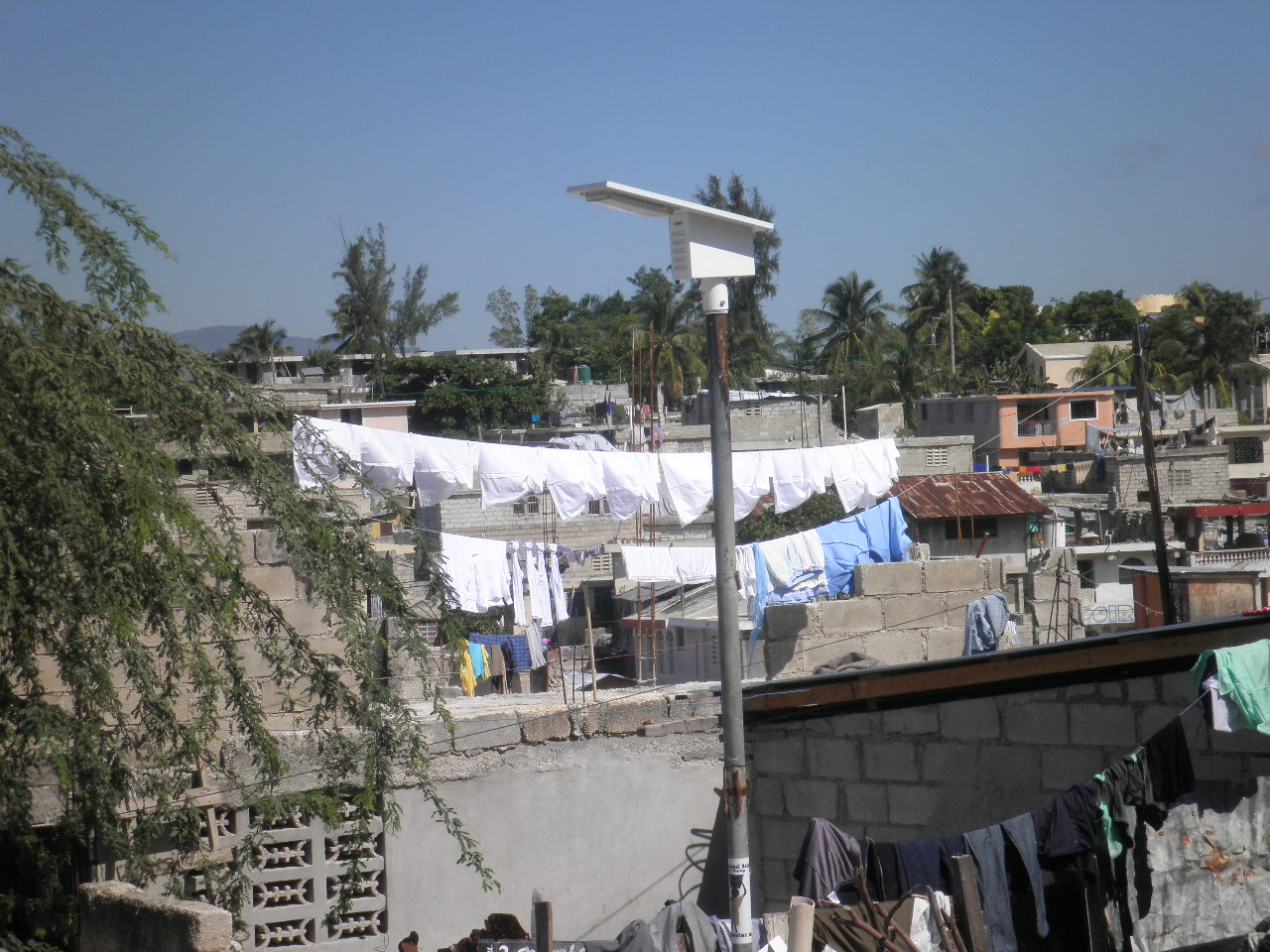
International Action's first solar light installation in Trou-Sable.

International Action's first solar light installation in Trou-Sable.

To make it safer for people to retrieve water at night, we have decided to install solar-powered lights at each of our water stations. We recently installed our first solar light at Trou-Sable in Port-au-Prince, an area that has had trouble with crime after dark. The light collects power during the day and comes on automatically when the sun goes down, illuminating the area around the water station and deterring would-be criminals.

Until we installed the light on September 16, 2011, members of some of the 200 families who use the water station consistently had to leave work during the day in order to collect water before sunset. Since the light went up, the number of people retrieving water at night has risen, and it is safer for residents to work, go to school, and sell goods at night.
Solar Lighting Saves Mothers

Our solar lighting initiative has led us to a second proposed solar effort to deal with the effects of inconsistent electricity supply in Haiti. Childbirth-related deaths are the second leading cause of death for Haitian women aged 15-49. The presence of solar lights can save lives simply by providing hospitals with a reliable source of light by which doctors can work, especially during critical procedures such as childbirth. 

We Care Solar, our partner in this project, created a solar light suitcase that is engineered for hospitals and has reduced childbirth-related mortality by 70% in Nigeria. The hospitals in Haiti are without electricity for an average of 8 hours a day. Some hospitals use generators for electricity when needed, but many hospitals cannot afford to run a gas powered generator for 8 hours. We plan to install lights in 28 hospitals throughout Haiti.

Our research director Zach Brehmer with the new solar light.

Our research director Zach Brehmer with the new solar light.

We are planning our first installation at a hospital in Gonaives that serves more than 1,000,000 inhabitants in the Artibonite department. The hospital’s maternity ward, which delivers approximately 215 children each month but has only 30 beds, receives electricity from the state-owned power company for an average of 14 hours a day. When the hospital can afford the exorbitant fuel prices, a generator provides further power; otherwise, deliveries take place at night by the light of whatever means are at hand. We hope to expand this project to ensure that lighting difficulties no longer threaten the safety of mother and child.